
At ASFW 2026, the runway did not operate in isolation from the conference floor. What emerged from the panel discourse was a clear repositioning of African fashion, particularly within Kenya, as a sector defined as much by systems, regulation, and capital flows as by design. The aesthetic is no longer leading. It is responding.
Scaling Industries Building Power from Within
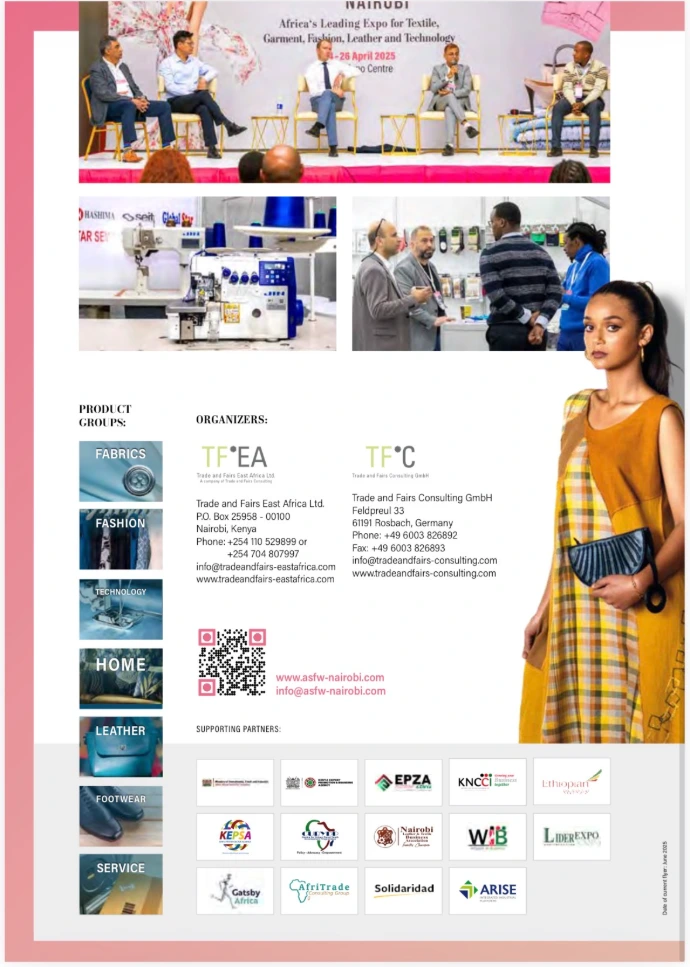
The conversation on scaling has moved beyond ambition into implementation. In the Kenyan context, this is anchored in the restructuring of local supply chains and the gradual integration of financial technologies into production ecosystems.
Kenya’s apparel and leather sectors remain heavily import dependent, particularly for finished textiles and certain categories of processed leather. However, institutions such as the Export Processing Zones Authority and the Kenya Leather Development Council have continued to push for localized value addition. The emphasis is no longer on raw material export but on intermediate and finished goods that retain higher margins within the domestic economy.
This shift is visible in design logic. Garments presented at ASFW reflected production awareness. Modular construction, repeatable silhouettes, and controlled material use point to an understanding of scalability. These are not one-off artistic pieces. They are prototypes for replication.
Fintech integration is also beginning to influence the structure of the industry, even if indirectly. Mobile money infrastructure led by platforms such as M-Pesa has already transformed transaction flows between suppliers, artisans, and small-scale manufacturers. Access to credit through digital lending platforms is gradually reducing entry barriers for SMEs operating within the leather and apparel value chains. The result is a more fluid production ecosystem where capital circulation is faster and less centralized.
Scaling, in this context, is not defined by expansion alone. It is defined by control over inputs, production timelines, and market access. The question is no longer whether Kenya can produce. It is whether it can retain value across each stage of the chain.
TVET Collaboration Legitimising African Fashion for Global Systems
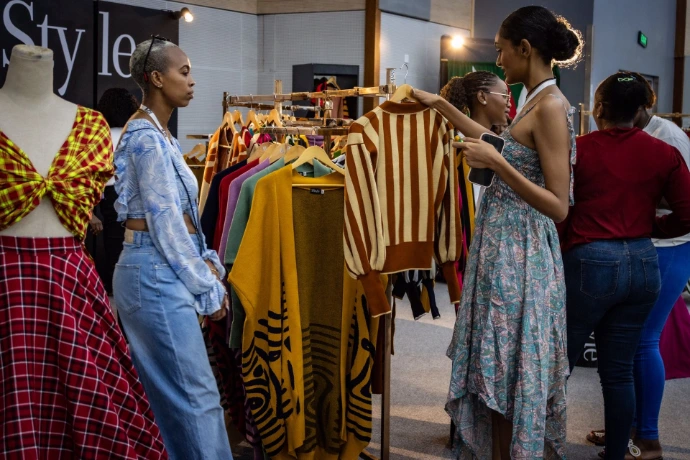
The linkage between Technical and Vocational Education and Training and industry is increasingly being framed as a compliance issue rather than a skills gap.
Kenya’s participation in global apparel markets is largely mediated through frameworks such as the African Growth and Opportunity Act and export relationships with the European Union. These markets impose strict requirements related to product standards, labour conditions, traceability, and customs procedures. As a result, training institutions are under pressure to produce graduates who understand not only design and production, but also regulatory environments.
At ASFW, this translated into a visible shift in design discipline. Garments reflected standardized sizing, consistent finishing, and material traceability. These are indicators of export readiness. They signal an awareness of due diligence requirements increasingly embedded in EU supply chain legislation and US import controls.
Intellectual property also featured prominently within this discussion. Kenyan designers are operating in a space where cultural motifs are both assets and vulnerabilities. The move toward more controlled and deliberate use of heritage elements reflects a growing awareness of ownership and the need for legal protection in international markets.
Certification is emerging as a strategic tool rather than a bureaucratic hurdle. Compliance frameworks related to ethical production and quality assurance are now being used to position factories and brands as credible global partners. This is particularly relevant for manufacturers operating within Export Processing Zones, where alignment with international standards directly affects market access.
The implication is clear. TVET is no longer limited to technical proficiency. It is an institutional bridge aligning Kenyan fashion with global legal, commercial, and branding systems.
Sustainability Regulations Designing Within Limits Creating Without Them
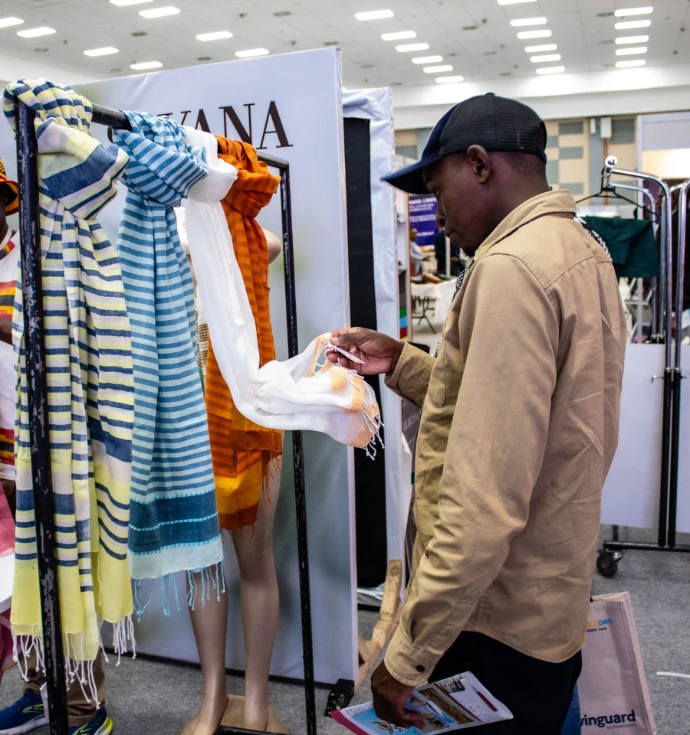
Sustainability within the Kenyan fashion and leather sectors is increasingly shaped by external regulatory pressure and internal material realities.
The European Union’s evolving sustainability directives and growing scrutiny on supply chains are beginning to influence how African producers think about waste, sourcing, and production processes. At the same time, Kenya’s own industrial constraints, particularly in waste management and recycling infrastructure, are forcing designers and SMEs to innovate at the material level.
This dual pressure was evident in the runway outcomes. Circularity was not presented as a conceptual ideal but as a material necessity. Designers worked with offcuts, surplus leather, and reclaimed textiles, transforming them into structured, high value pieces. This is particularly relevant in the leather sector, where postproduction waste remains underutilized despite its commercial potential.
Artisans and SMEs are central to this transition. In Kenya, a significant portion of leather and textile production operates within informal or semi formal structures. These actors are often closer to raw materials and therefore more responsive to waste based innovation. Their ability to adapt quickly gives them an advantage in developing waste to value models, even in the absence of large-scale recycling infrastructure.
Institutions such as the Kenya Industrial Research and Development Institute have begun supporting research into material processing and waste utilization, but the ecosystem remains fragmented. What is emerging instead is a decentralized model of sustainability driven by necessity rather than policy coherence.
The outcome is a distinct design language. Irregularity, reconstruction, and material hybridity are no longer aesthetic experiments. They are indicators of a production system negotiating constraint.
Conclusion
What ASFW 2026 made evident is that the Kenyan fashion industry is undergoing structural consolidation. The aesthetic is increasingly shaped by supply chains, regulatory frameworks, and capital access.
Scaling is redefining how garments are produced. TVET collaboration is redefining how the industry aligns with global systems. Sustainability is redefining how materials are sourced and transformed.
The shift is precise. Fashion in Kenya is no longer positioning itself as emerging. It is positioning itself as compliant, competitive, and strategically embedded within global value chains.