
There is a fundamental distinction between African fashion and what might more accurately be described as styling African, yet the two are often treated as interchangeable.
To understand the difference, it is useful to first consider what distinguishes clothing from fashion.
Clothing begins with function. It protects the body from the environment, facilitates movement and responds to the practical conditions of everyday life such as climate, geography, occupation, and trade.
Fashion emerges when clothing becomes more than a physical and circumstantial necessity. It becomes a system through which people communicate identity, status, belonging, taste and aspiration. Over time, societies develop increasingly sophisticated ideas about what is desirable, appropriate, beautiful and valuable.
African societies are no exception.
Across the continent, clothing and adornment have historically communicated status, age, identity, occupation, marital position, spirituality and social belonging. Materials and techniques have often carried meanings that extend far beyond their physical function. Beads, shells, metals, leather, woven textiles, embroidery, body adornment and other forms of material culture have served not only practical purposes but also social and cultural ones.
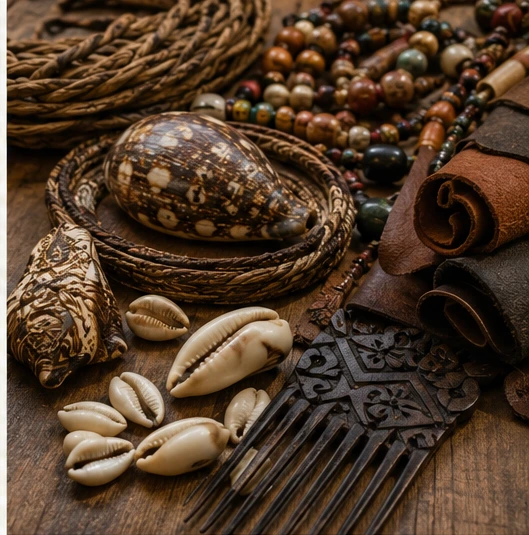
This is where fashion begins to engage with an idea that remains central to it today: the pursuit of distinction.
Distinction is partly about preference.
Why is one material considered more desirable than another?
Why does one technique become associated with prestige?
Why does a particular silhouette come to represent refinement?
Why does something become fashionable at one moment and undesirable at another?
The idea of the best of the best is therefore not simply about extravagance. It is about the constantly changing perception of quality, desirability, innovation, craftsmanship and cultural value.
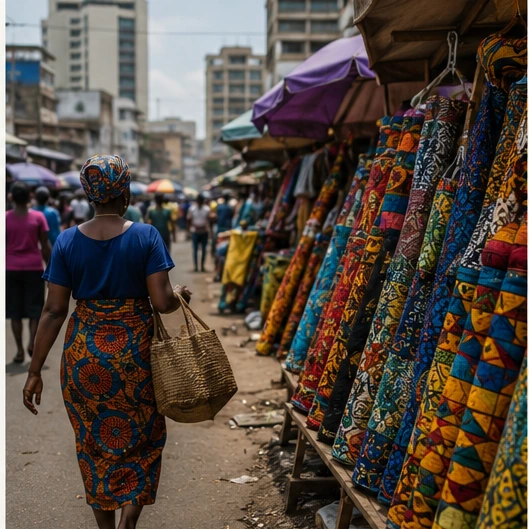
This creates an important question for African fashion today:
Are we simply preserving African objects, or are we developing an African fashion system?
Because an object can be culturally African without necessarily functioning as relevant to contemporary African fashion.
A shell, bead, woven textile, leather object or traditional silhouette may possess extraordinary cultural and historical value. But placing it onto a contemporary outfit without consideration of proportion, construction, context or purpose does not automatically constitute fashion.
Fashion requires interpretation.
It requires decisions about material, scale, construction, function, proportion, context and desirability. It requires an understanding of what an element meant historically and what it can mean now.
In other words, the cultural origin of an object is not the same thing as its fashion value.
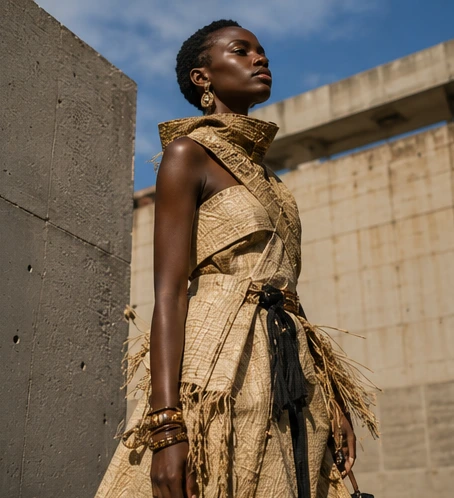
This is where styling can become superficial. Styling can borrow the visual language of African culture without necessarily engaging with the design intelligence behind it or considering how that knowledge can exist within contemporary life.
A collection can contain beads, prints, shells, raffia and other recognisably African materials and still feel more like a reconstruction of heritage than a proposition for contemporary fashion.
That distinction matters.
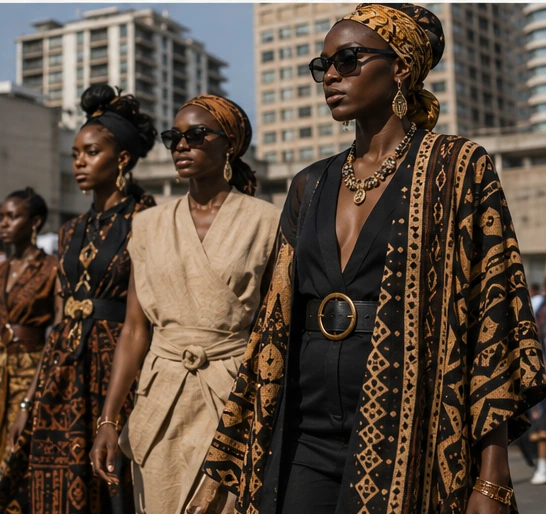
Museums preserve objects because objects carry historical knowledge. Fashion, however, operates in the present. It is worn, moved in, worked in, bought, sold, photographed and experienced by contemporary bodies living contemporary lives.
The challenge, therefore, is not simply to preserve African heritage. It is to translate it.
What happens when designers understand the principles behind these materials and techniques and transform them for the present?
That is where fashion begins.
The task is not to make heritage look fashionable. It is to turn heritage into fashion.
There is a tendency to assume that for something to read as African, it must be immediately identifiable as such. The more beads, the more obvious the print, the more recognisable the silhouette, the more convincingly African the result is assumed to be.
But this is an extraordinarily narrow understanding of what African fashion can be.
Some of the most compelling expressions of contemporary African fashion may, in fact, be less literal. A designer can draw from a traditional construction technique, a local material, a regional proportion, an indigenous colour relationship or a philosophy of making without reproducing a historical garment.
The reference may be subtle, but the knowledge behind it is not.
That is the difference between using heritage as an aesthetic reference and designing from heritage as a source of knowledge.
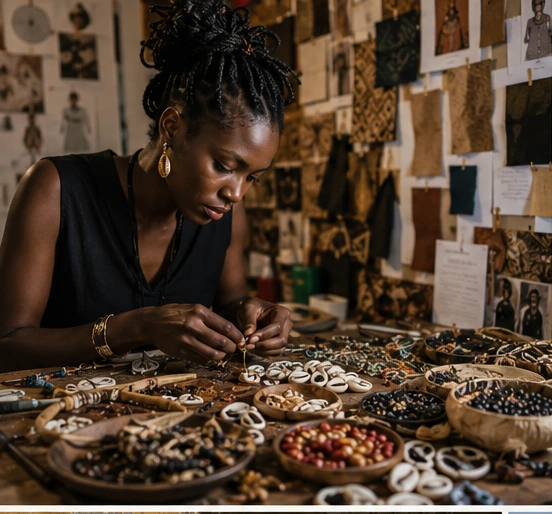
The latter requires research, interpretation and restraint. It requires asking how traditional knowledge can respond to contemporary bodies, contemporary lifestyles, contemporary markets and contemporary ideas of beauty. It also requires knowing when to preserve, when to adapt and, importantly, when not to use something simply because it looks recognisably African.
This is why African fashion cannot be reduced to a checklist of symbols.
If the requirement for something to be considered African fashion is simply the presence of beads, prints, shells, raffia or traditional silhouettes, then we risk reducing an extraordinarily complex design heritage into a visual stereotype.
African fashion deserves greater intellectual ambition than that.
It also deserves greater commercial ambition.
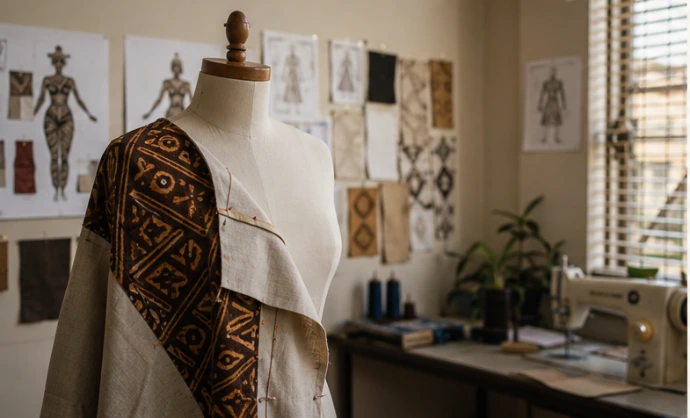
A sustainable African fashion industry cannot rely indefinitely on cultural recognition alone. Designers must create products that people actually want to wear, repeatedly and across different contexts. They must consider quality, comfort, durability, production, price, market relevance and contemporary lifestyles alongside cultural identity.
The objective should not be to make African fashion less African in order to make it contemporary.
It should be to make contemporary fashion more intelligently African.
That means moving from preservation to interpretation, from reference to design and from decoration to intention.
Styling African is easy.
Find the print. Add the beads. Introduce the shell. Put on the basket bag. The visual language is immediately legible.
Designing African is considerably harder.
It requires understanding where those elements come from, why they existed, what they were designed to achieve and what they could become. It requires the ability to translate cultural knowledge into something relevant without stripping it of meaning.
Ultimately, African fashion needs to design from its own knowledge systems.
Because the future of African fashion will not be determined by how many African objects we can place on a runway. It will be determined by our ability to transform heritage, craftsmanship, material knowledge and contemporary African realities into fashion that belongs not only to our history, but to our everyday lives.
That is the difference between styling African and dressing African.
One creates an image.
The other creates a fashion language.