
There is a familiar expression that we eat with our eyes first, and there is some truth in it. The eye is, after all, an efficient little judge. It scans the plate, makes a decision and, often before the first bite, has already formed an opinion.
The problem is that we have become rather too good at judging by appearances.
In an age of carefully engineered images, polished presentations and food designed to photograph beautifully, visual appeal can become an end in itself. We see a beautiful plate and assume we understand it. But appearance tells us very little about why a dish works. It cannot explain the relationship between acidity and fat, smoke and citrus, sweetness and heat, texture and temperature. It certainly cannot tell us why one wine belongs beside a particular dish and another does not.
That requires something less immediate and considerably more interesting: curiosity.
This is where wine and food pairing becomes quite relevant. At AfriHue, we see it as one of the purest forms of culinary curiosity. It is rather like sitting at a table with the friend who takes food seriously, ordering course after course and deciding that, for once, the meal itself will be the centre of the conversation.
Radisson Blu Arboretum's Beyond the Glass experience understood this principle through progression of small tasteful dishes. The menu moved from the sea into richer, more terrestrial flavours, and the wines complemented rather masterfully that development.
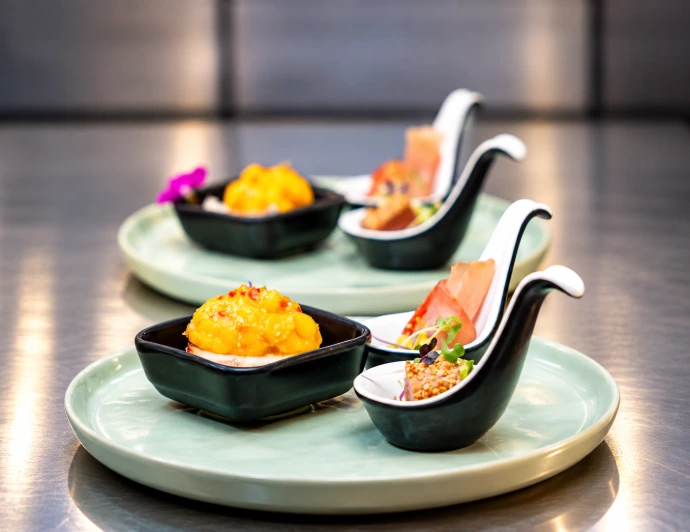
The opening course, smoked sailfish with avocado, spice and citrus, established the grammar of the meal.
Smoked sailfish brings salinity and a deeper savoury character. Avocado softens that intensity with richness and fat, while citrus performs the necessary act of intervention. Its acidity cuts through the richness and lifts the fish rather than allowing the smoke to dominate. It is a dish built on balance: richness needs acidity; smoke needs freshness; delicate fish needs enough intensity to remain interesting without being overwhelmed.
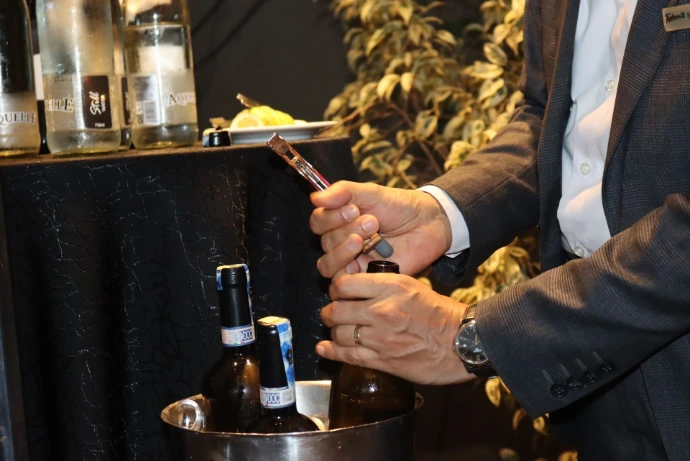
The Ai Galli Pinot Grigio was therefore less a pairing in the simplistic sense of "fish goes with white wine" and more a continuation of the dish's internal logic. Its fresh acidity cleanses the palate after the avocado, while its light body allows the sailfish to remain the principal character. Its citrus and restrained fruit profile also sits naturally beside the dressing.
The second course, yellowfin, sesame and sweet melon, tested whether that relationship could survive a change in flavour and remain coherent.
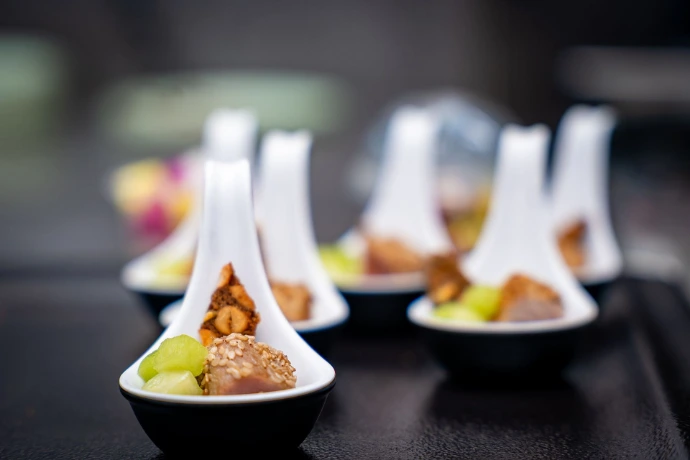
The yellowfin was sesame-crusted and marinated in sweet melon, accompanied by parsley crème and toasted sesame. Suddenly the palate had more competing registers: the clean, meaty character of the tuna, the sweetness of melon, the nuttiness of sesame and the herbal freshness of parsley. The dish had moved away from smoke and citrus without abandoning the principle of contrast.
The decision to retain the Pinot Grigio was therefore significant. A new wine could easily have been introduced simply to signal that the menu had changed. Instead, the same wine provided continuity. Its acidity restrained the sweetness of the melon, its freshness prevented the sesame and crème from becoming too rich, and its relatively delicate profile allowed the tuna to remain central.
The wine was essentially performing the role of a good editor: present enough to make the story clearer, cohesive enough not to rewrite it.
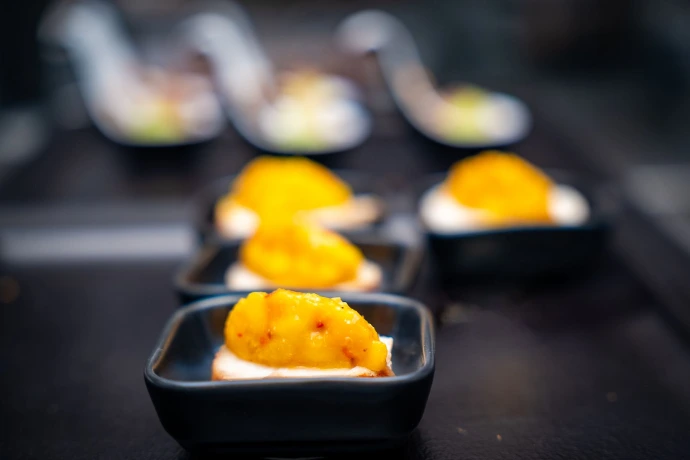
By the time rock lobster with jalapeño mango salad, roasted peanuts and fresh herbs arrived, the sensorial experience had become more adventurous. Lobster brought sweetness and delicacy. Mango intensified the fruit profile. Jalapeño introduced heat. Roasted peanuts contributed richness, texture and savoury depth, while fresh herbs pulled everything back towards brightness.
What could easily have become a collection of competing personalities remained surprisingly coherent.
Again, the Pinot Grigio made sense because Its acidity could work against the richness of the lobster and peanuts, while its freshness kept pace with the mango and herbs. The wine created enough space for each ingredient to reveal another layer of flavour, allowing the palate to move through different sensations rather than experiencing everything at once.
And this is perhaps the more sophisticated way to think about pairing. The question is not always, does this wine match this ingredient? It can be, It can instead be, how does this wine allow the different elements of the menu to complement one another, building on the impressions each course leaves behind?
That distinction became clearer as the menu moved from the sea to the land.
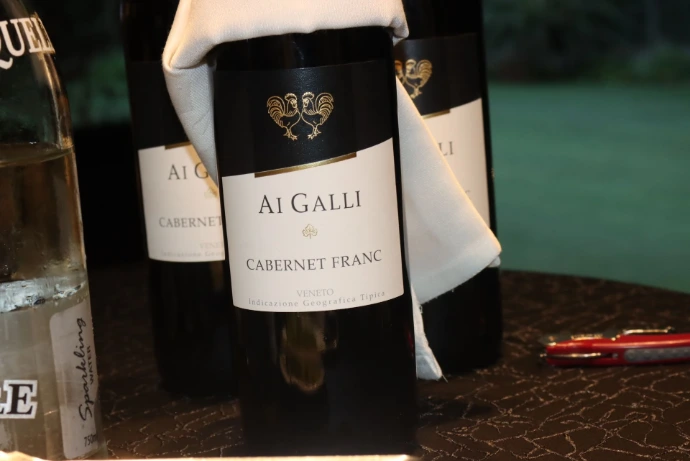
The arrival of Cabernet Franc marked a change not merely in colour, but in structure. Cabernet Franc tends to bring greater body and savoury complexity, with red-fruit, herbal and subtly earthy characteristics alongside acidity and tannic structure. Those qualities make it better suited to the increasingly rich and savoury direction of the menu.
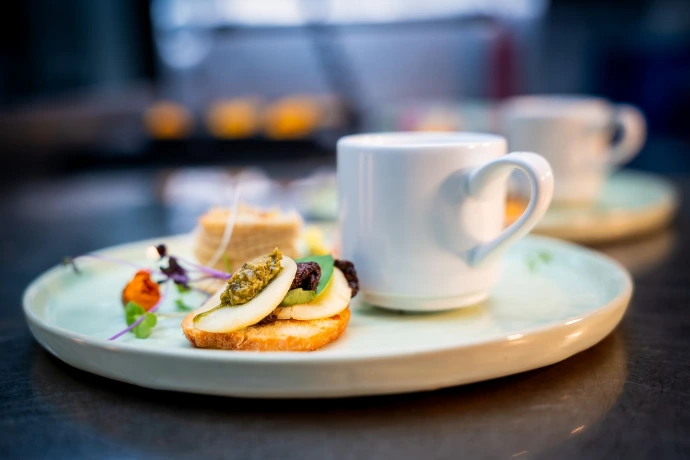
The bruschetta al pomodoro, with garlic-rubbed sourdough, vine tomatoes, mozzarella and fresh basil, introduced a familiar Italian touch: acidity from the tomato, richness from the mozzarella, aromatic lift from basil and savoury depth from garlic and toasted bread.
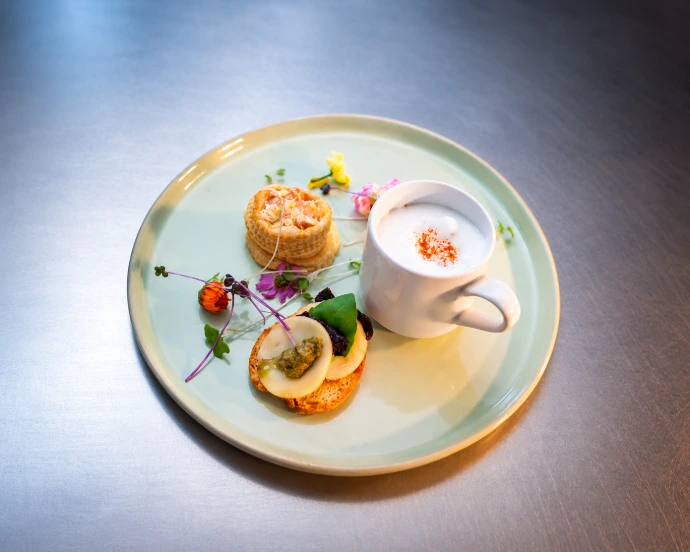
Then came the fontina and prosciutto vol-au-vent, where buttery pastry, melted cheese and ham considerably raised the levels of fat, salt and richness. Cabernet Franc generally brings a combination of acidity, moderate tannin, red-fruit character and savoury, herbal notes. That combination gives it enough structure to engage with meat and cured proteins while retaining enough freshness to keep richer foods from becoming ponderous.
This mattered particularly with the prosciutto.
The ham carries concentrated salt and savoury umami, while the buttery vol-au-vent and melted Fontina bring fat and softness. The Cabernet Franc gives the palate something firmer to push against. Its acidity refreshes after the richness of the pastry and cheese, while its tannic structure interacts with the protein and fat of the prosciutto, making the wine feel rounder and the meat less aggressively salty.
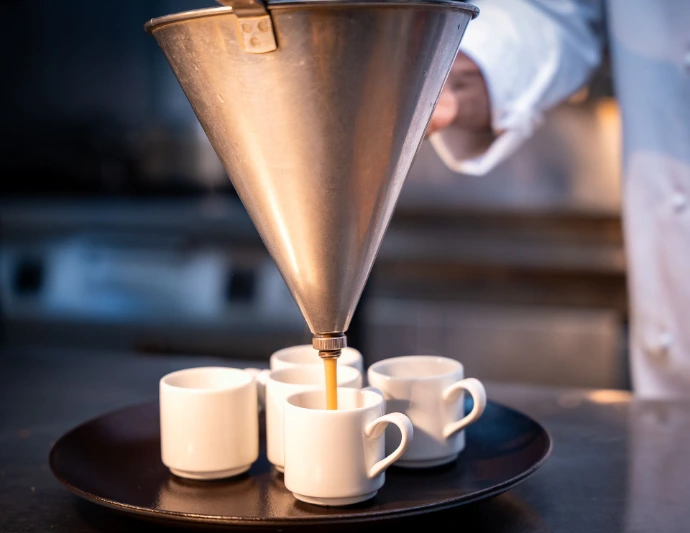
The final course, velouté de champignons sauvages with parmesan crisp and herb oil, completed that movement. Wild mushrooms bring an earthy, umami-rich character. The velouté adds silkiness and weight. Parmesan intensifies the savoury depth, while the herb oil introduces an aromatic freshness that keeps the dish from becoming entirely dense.
Here, Cabernet Franc finds perhaps its most natural pairing partner.
Its savoury and herbal qualities can echo the mushrooms and herbs, while its acidity prevents the richness of the soup and parmesan from sitting too heavily on the palate. Its structure also gives the final course sufficient presence to feel like a conclusion.
There is a temptation, particularly in fine dining, to assume that complexity means adding more. Another ingredient. Another sauce. Another wine. Another flourish. But sophistication can also mean knowing when to do less.
Perhaps that is why the experience invites us to reconsider the idea that we eat with our eyes first. We certainly look first. But looking is only the beginning of understanding.
The eye gets us to the table. The quality of the food makes us come back.
And somewhere between the two is curiosity, which may be one of the more underrated ingredients in dining.
At AfriHue, this is what makes wine and food pairing worth paying attention to. It teaches us to read food beyond presentation, to notice how acidity cuts through fat, sweetness meets heat and tannin gives protein structure.
Beyond the Glass understood this language well. The Pinot Grigio created a clean thread through the seafood, while the Cabernet Franc brought the weight and savoury structure required by the prosciutto, Fontina and wild mushrooms.
But there was an opportunity to be a little less polite.
The lobster course, in particular, offered the menu a chance to disrupt its own rhythm. Sweet lobster and mango, the green heat of jalapeño, roasted peanut and fresh herbs create a far more layered palate than the opening seafood courses. Rather than allowing the Pinot Grigio to carry that progression forward, this could have been the moment for a more textural, aromatic wine with enough tension to engage the mango and jalapeño while still respecting the lobster. A lightly oxidative white, an aromatic Rhône-style white or even a finely structured rosé could have introduced an entirely different register without abandoning the freshness of the menu.
The Cabernet Franc arrived alongside the Fontina and prosciutto vol-au-vent, a combination that worked through fat, salt and savoury depth, but felt comparatively safe against the possibilities of the wine. Cabernet Franc has enough acidity, tannin and herbal character to support something with greater char, earth or umami. A more deeply roasted protein, perhaps a finely seared piece of meat with a restrained jus, caramelised vegetable element or mushroom component, could have given the wine something more substantial to engage with. The pairing would then become less about simply matching richness and more about creating tension between char, savouriness, acidity and fruit.
The next iteration could afford to take more calculated risks, allowing the wine to challenge the food as much as the food challenges the wine. Because sometimes the most intelligent pairing is not the one that makes perfect sense immediately. It is the one that makes you pause, take another bite, and then realise why it works.