
Kenya’s fashion industry is increasingly looking towards China’s enormous manufacturing, technology and e-commerce ecosystem as it searches for ways to expand production, improve competitiveness and position local brands for regional and global markets.
The conversation surfaced at the third edition of the East Africa (Kenya) Fashion Life Show at Sarit Expo Centre, where manufacturers, designers, retailers, distributors, importers, exporters and professional buyers gathered around a question, Kenya can no longer afford to avoid: how do we manufacture at scale without manufacturing mediocrity?
It is true that when we think of Chinese manufacturing, a particular image comes to mind: exhausted workers of all ages producing mountains of disposable, cheap clothing. That image is not entirely invented. But it is an incomplete understanding of the power and sophistication of manufacturing.
The problem is not manufacturing. It is manufacturing without standards, accountability or expertise.
That distinction matters.
Factories that exploit workers, copy designs, cut corners or produce substandard goods are not evidence that manufacturing is inherently incompatible with quality. They are evidence of bad manufacturing systems. Yet the conversation too often stops there, reducing an enormously complex industrial ecosystem to its worst actors.
That does little to advance the real question.
The issue is not whether factories can produce cheaply. Of course they can. The more important question is what happens when manufacturing is built around technical expertise, specialised craftsmanship, rigorous standards, material intelligence and quality control?
Ultimately, it comes down to how much expertise is built into the making.
Kenya's manufacturing ambitions needs to become considerably more sophisticated.
The choice of Fabric

There is a persistent assumption that scaling a fashion business means finding a factory, sending over a sample and asking for 5,000 more.
That is production.
It is not necessarily manufacturing excellence.
Sophisticated manufacturing begins long before the garment reaches the factory floor. Often, it begins with the fabric.
Luxury houses do not simply ask, What fabric is available? They ask a more fundamental question: What fabric does this garment require?
That distinction is crucial. The material is not a passive ingredient selected after the design is complete. Its weight, structure, drape, texture, finish, movement and response to the body all influence what the garment can ultimately become.
Sometimes the right fabric already exists. Sometimes it has to be developed. And sometimes finding it requires travelling to mills, meeting suppliers and physically handling materials until it behaves precisely as intended.
And this is where serious manufacturing begins to reveal itself: not in how quickly a factory can reproduce a garment, but in how intelligently an entire system can translate an idea into a close to perfection finished product.
The Difference Between Sewing and Craftsmanship

People and machines can sew a garment.
That does not mean either can construct one intelligently.
Sewing skills are essential to standard production. But craftsmanship begins where sewing reaches its limits.
Consider a complex garment made from a delicate fabric. Its success may depend on an invisible hand finish, the precise manipulation of a seam, the way a sleeve falls, the balance of a shoulder, the tension of a hem, or the meeting of two materials without exposing how the garment was constructed.
These are not simply sewing instructions.
They are decisions.
An experienced artisan understands that fabric has a temperament. They know when a material needs less pressure, when a seam requires reinforcement, when a particular finish will compromise the drape, or when something can technically meet a specification and still not look right.
That knowledge is difficult to automate.
It is accumulated through years of repetition, observation and correction. This is the kind of expertise that turns technical ability into judgement.
This is why the distinction between someone who knows how to sew and an artisan who understands construction matters.
One can execute the instruction.
The other can interpret the material.
And luxury, at its highest level, requires interpretation.
Scale Does Not Mean Making Everything Identical

This becomes even more important when a brand begins grading its garments into different sizes.
A garment cannot be enlarged or reduced mechanically while expecting the proportions to remain convincing.
The sleeve, shoulder, neckline, rise, pocket placement, waist, hem and overall balance must respond to the changing proportions of the body. The objective is not to create five versions of the same mathematical object.
The objective is to preserve the same silhouette across different bodies.
This is one of the key principles behind good manufacturing.
A garment can look exceptional in a sample size and deteriorate dramatically when graded poorly. The larger or smaller version may technically be the correct size while losing the architecture that made the original compelling.
The items need to feel the same more than look the same.
That is the point.
Then There Is Embellishment

Embellishment can take many forms, from embroidery and appliqué to intricate beadwork, sequins, hand printing, quilting, smocking, lacing, pleating and other forms of surface manipulation.
Each technique introduces its own demands, its own materials and its own margin for error. Done well, these processes can transform a garment from technically complete to materially and visually extraordinary.
But they also expose one of the biggest misconceptions about manufacturing: a successful factory is not necessarily one that can do everything.
In fact, some of the most sophisticated production systems are built around the opposite principle: specialisation.
One specialist may dedicate years to embroidery. Another to leather finishing. Another to hand beading. Another to printing. Another to hardware, buttons or zippers. Their expertise becomes increasingly narrow and increasingly valuable.
Because mastery is often built through repetition.
The person who has spent years perfecting one technique develops a precision, speed and intuition that a generalist simply cannot reproduce by doing a little of everything.
This is why sophisticated manufacturing does not always look like one enormous facility containing every possible capability. It can look like an ecosystem.
The designer, fabric developer, mill, pattern-maker, grader, cutter, embroidery specialist, component supplier, artisan, finishing specialist and quality-control team each occupy a distinct position within the production process.
Their roles are interdependent, with each stage informing and shaping the next, so that the quality of the final garment is determined not by a single intervention but by the cumulative precision, expertise and coordination across the entire system.
Manufacturing excellence is therefore less about finding one factory that does everything and more about building a production network in which every component is exceptionally good at what it does.
That is a fundamentally different way of thinking about Value.
The Case for the Human Hand
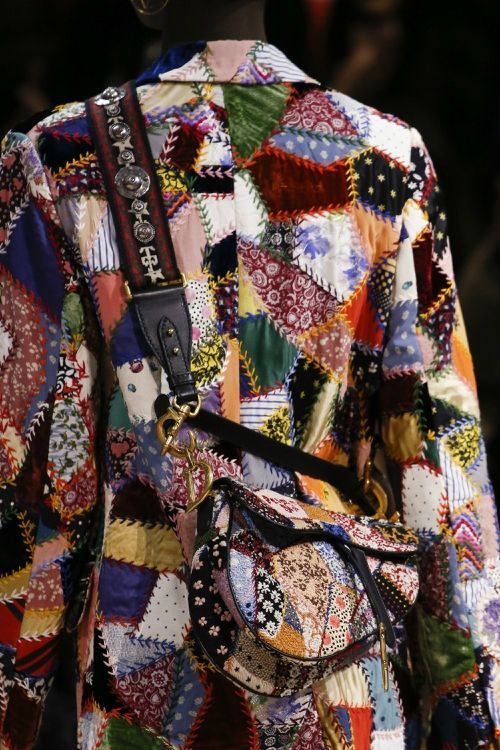
This is perhaps the most important contradiction in modern manufacturing.
The very machines that make scale possible can also reveal the limits of standardisation.
Machines are extraordinarily useful. They increase speed, improve repeatability, reduce certain forms of human error and make large-scale production possible. But efficiency has its limits. A machine can reproduce a defined action with remarkable consistency; it cannot exercise judgement about the material in front of it.
It does not know that one fabric requires less pressure than another, that a particular seam needs to be handled differently, or that an irregularity may contribute to the character of the finished piece. It follows parameters.
Kenya Does Not Need to Fear China. It Needs to Understand Manufacturing.
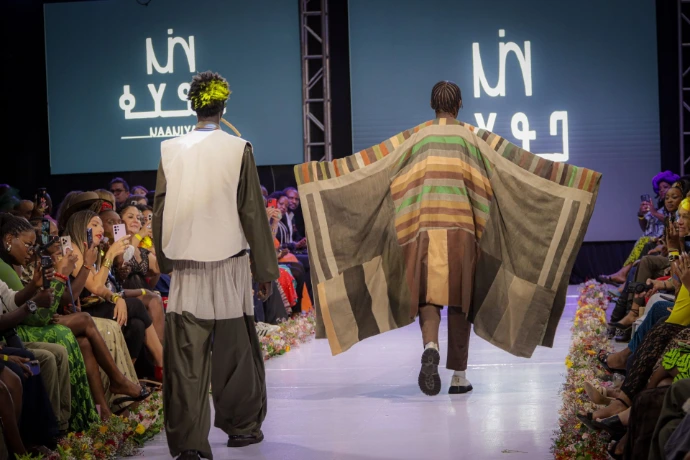
This is where Kenya's conversation about China becomes much more interesting.
The question should not be whether Kenya should manufacture with China or whether Chinese manufacturing automatically means cheap production.
The more useful question is:
What kind of manufacturing capability does Kenya want to build?
If the ambition is simply to produce more garments for less money, there will always be a company willing to do it cheaper for the best bidder.
That is a race Kenya is unlikely to win indefinitely.
This is the manufacturing reality Kenya must confront if it wants to move beyond simply producing more clothing.
Scale alone does not create a competitive fashion industry. If Kenya builds manufacturing capacity around speed, volume and low cost without investing in the expertise that gives products their quality, it will simply increase the quantity of garments it can produce without increasing the value of what it produces.
Luxury costs more because the systems required to produce it are more demanding than those of mass production. The process takes longer, involves more specialised expertise and requires greater investment.
This is where the economics of luxury become important. What appears to be an expensive garment is, in reality, the visible outcome of an expensive production system. Its price reflects not only the material or the label, but the accumulated expertise required to transform those materials into something precise, durable and unique.
The opportunity, therefore, is not merely to manufacture at scale. It is to build the manufacturing intelligence capable of making scale valuable.
This is the difference between luxury and the performance of luxury.
One invests in the infrastructure of excellence.
The other invests primarily in its appearance.