
The history of transportation is, fundamentally, a history of human beings attempting to overcome the limits of time, distance and physical effort. From animal-powered transport to mechanised mobility, each major development in transportation has altered not only how people move, but also how economies function, how goods circulate and how societies organise themselves.
For centuries, much of this work depended on animals. Horses, donkeys and oxen provided the power required to transport people and goods across considerable distances. In parts of Kenya and across the African continent, animal-powered transport remains part of everyday economic life, particularly in rural communities. The underlying principle, however, has remained constant: mobility increases the capacity to work, trade and connect.
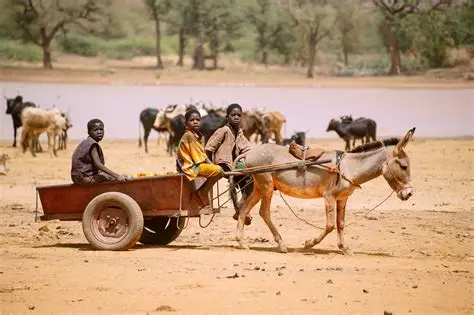
The automobile represented a fundamental change in that relationship between mobility and productivity. Instead of depending on animal strength, transportation could increasingly be powered by mechanical energy. Yet when the first automobile arrived in Kenya, its significance was not immediately economic or social in the way we understand it today. It was an extraordinary technological object, and access to it was highly restricted.
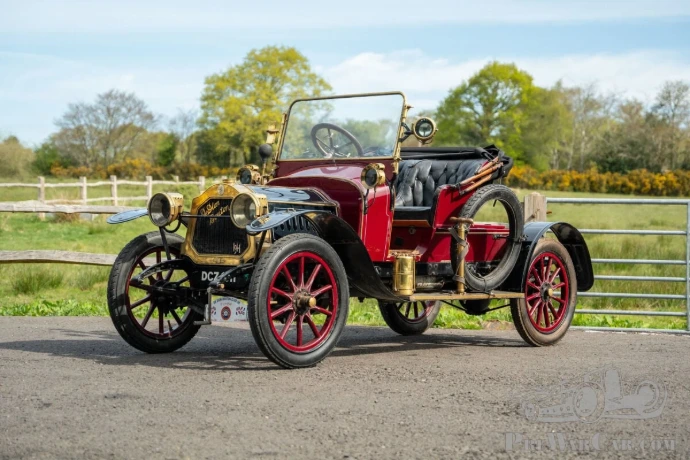
In December 1903, a French-made De Dion-Bouton motor car arrived at Mombasa's port in the possession of George Wilson, an Australian road engineer. The circumstances surrounding its arrival illustrate just how undeveloped the automotive ecosystem was. There were no petrol stations, few roads suitable for motor vehicles and no established infrastructure for servicing them. Even fuel had to be brought in tins.
The automobile had therefore arrived before the system required to support it.
This is an important distinction in understanding Kenya's motoring history. Technological adoption does not occur simply because a technology exists. It depends on infrastructure, capital, institutions and a population able to incorporate that technology into everyday life. In the early twentieth century, the automobile belonged largely to those who possessed the resources and institutional access to make use of it. Its scarcity consequently gave it another form of value: status.
As roads improved and more vehicles entered the country, that status gradually acquired an economic function. The automobile became increasingly useful to administrators, businesses, agricultural enterprises and commercial operators. What began as an imported curiosity was becoming part of the infrastructure through which the colonial economy operated.
Independence introduced a different question: if the automobile had become important to economic development, could Kenya develop the capacity to produce and assemble vehicles itself?
The answer formed part of the country's broader post-independence industrialisation strategy. Vehicle assembly became an instrument of import substitution and industrial development. Kenya's first assembly operations predated independence, but the sector expanded significantly in the 1970s, when government policy encouraged assembly from completely knocked-down kits rather than relying entirely on fully built imports. Associated Vehicle Assemblers in Mombasa and Kenya Vehicle Manufacturers in Thika became part of this emerging industrial base.
The significance of local assembly extended beyond the vehicles themselves. It represented an attempt to move some economic value from the point of consumption to the point of production: creating employment, developing technical capabilities and establishing relationships with local component manufacturers. Yet the Kenyan market continued to depend substantially on imported vehicles, particularly as consumer demand expanded.
The next major transformation therefore came not from manufacturing, but from market liberalisation.
During the 1990s, the relaxation of import controls contributed to a dramatic increase in the availability of second-hand vehicles. Japan became a particularly important source because of the compatibility of right-hand-drive vehicles with Kenya's left-hand traffic system. Japanese makes such as Toyota, Nissan, Mazda and Subaru consequently became increasingly common on Kenyan roads.
This changed the social meaning of the automobile once again.
The car was no longer principally a possession of the colonial administration, wealthy landowners or large commercial enterprises. It became accessible to a much broader section of Kenyan society. Vehicle ownership increasingly represented personal mobility, economic opportunity, family convenience and independence.
The progression is therefore significant. The automobile entered Kenya as a scarce technological object. It became an instrument of economic activity, then a component of industrial policy, and eventually a mass consumer good.
But mass ownership introduced a new relationship with the automobile: consumption.
Once vehicles became easier to acquire, the value of a car could increasingly be measured through utility. How many kilometres can it cover? How much fuel does it consume? How much can it carry? When should it be replaced? The car became something to use, maintain and eventually dispose of.
This is precisely why the culture surrounding historic and collectible automobiles offers a useful counterpoint.
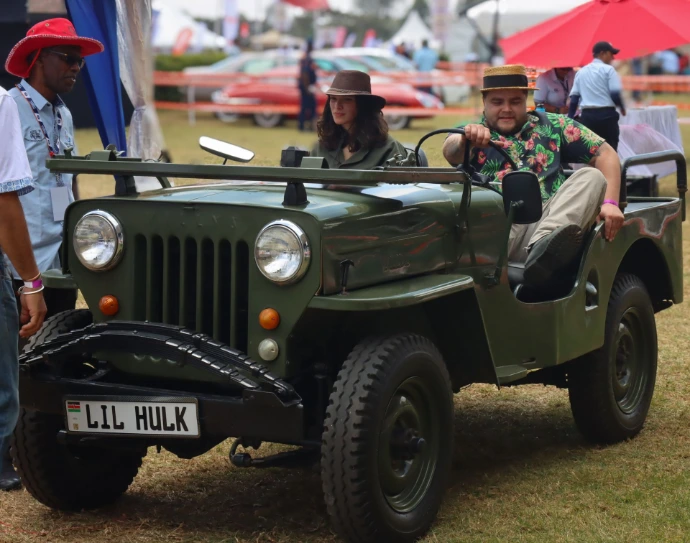
Events such as the Concours d’Élégance temporarily suspend the ordinary logic of the road. The automobile is removed from the rush of commuting, commerce and utility and placed within a different framework: one of appreciation. Design, engineering, craftsmanship, originality, restoration and provenance become visible in ways that everyday use tends to obscure.
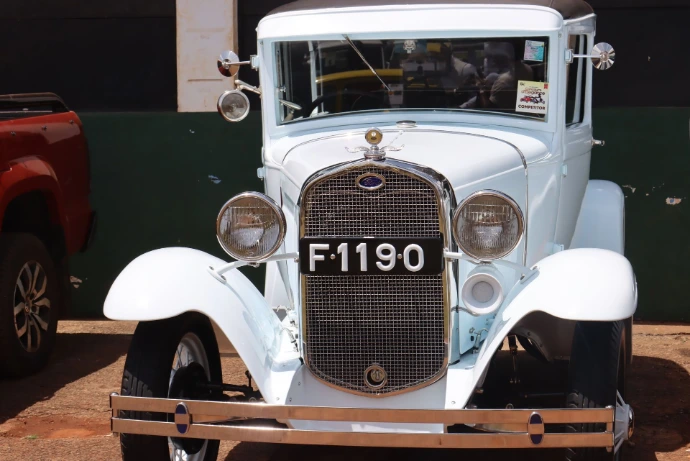
The significance of such events is therefore not simply that they celebrate old cars. They change the question we ask of the automobile.
Instead of asking what a car can do for us, we begin to ask what went into making it.
That shift brings craftsmanship back into the conversation. A vehicle becomes evidence of a particular period of engineering, industrial design and material culture. Its value is no longer determined solely by its usefulness as transportation. Its history becomes part of its worth.
This is where the idea of ownership becomes more interesting.
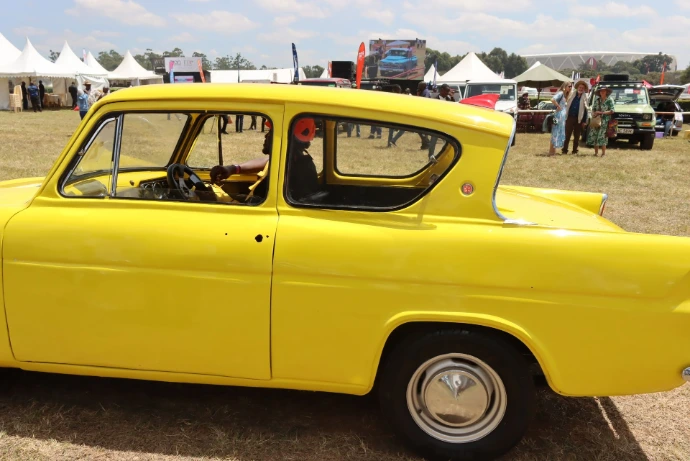
Consumer culture tends to treat depreciation as the natural endpoint of an automobile's life. A newer model arrives, technology advances and the older vehicle becomes less desirable. Collecting operates according to a different logic. It recognises that some objects acquire value precisely because they have been maintained, documented and preserved over time.
Age, in this context, is not sufficient. Condition matters. Provenance matters. Originality matters. The quality of restoration matters. Most importantly, care matters.
That principle extends beyond collectors.
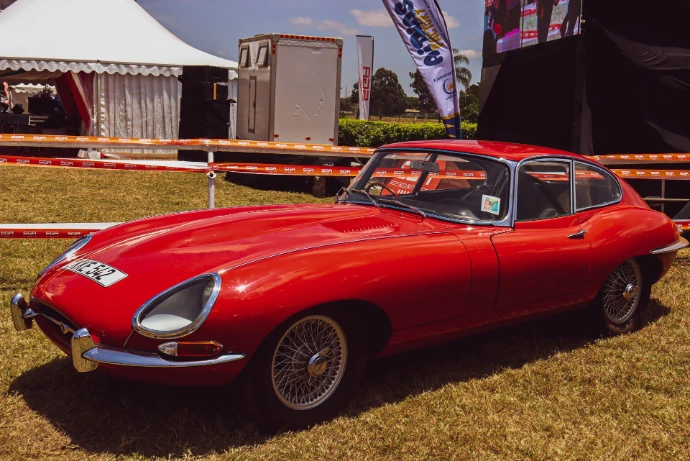
The environmental question surrounding automobiles also requires us to think beyond the simple assumption that newer automatically means better or that older automatically means more sustainable. Vehicles have environmental costs throughout their lifecycle, including manufacturing, material extraction, fuel consumption and eventual disposal. At the same time, older vehicles can have poorer fuel efficiency and higher emissions than newer models. Responsible ownership therefore requires judgement rather than nostalgia: maintaining a vehicle properly, extending its useful life where appropriate, and replacing it when its environmental or mechanical costs make continued use unreasonable.
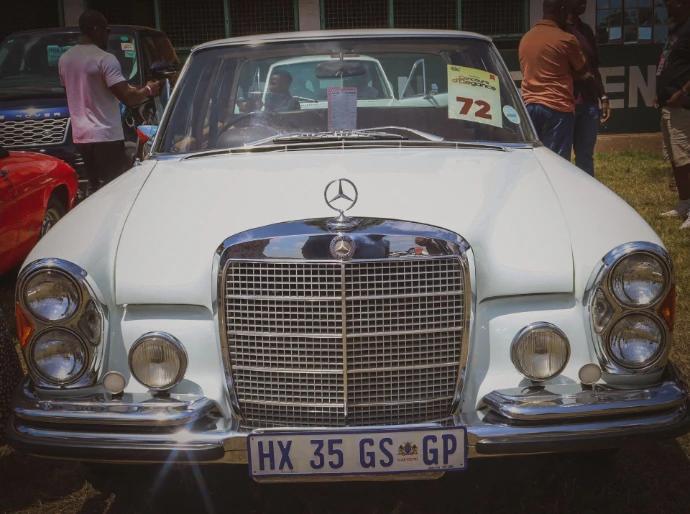
The deeper lesson is about our relationship with things.
The history of motoring in Kenya traces a movement from scarcity to accessibility. But accessibility does not have to result in disposability. An object can become more meaningful when we understand the labour, engineering, materials and history invested in creating it.
The automobile was revolutionary because it gave people something previous generations had never possessed at scale: greater control over distance. It transformed mobility from a constraint into a form of personal and economic freedom.
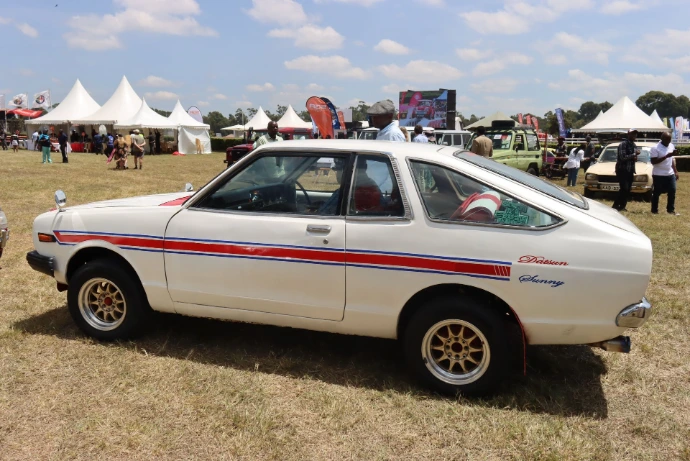
The next question is what we do with that freedom.
Perhaps the mature expression of car ownership is not simply the ability to acquire a vehicle, but the ability to recognise its value beyond immediate utility. To maintain something carefully is to acknowledge that its worth does not end when its novelty does.
The road has always been about moving forward. Preservation asks us to understand what is worth carrying with us.
Here and now may determine what we consume. Time determines what acquires value.