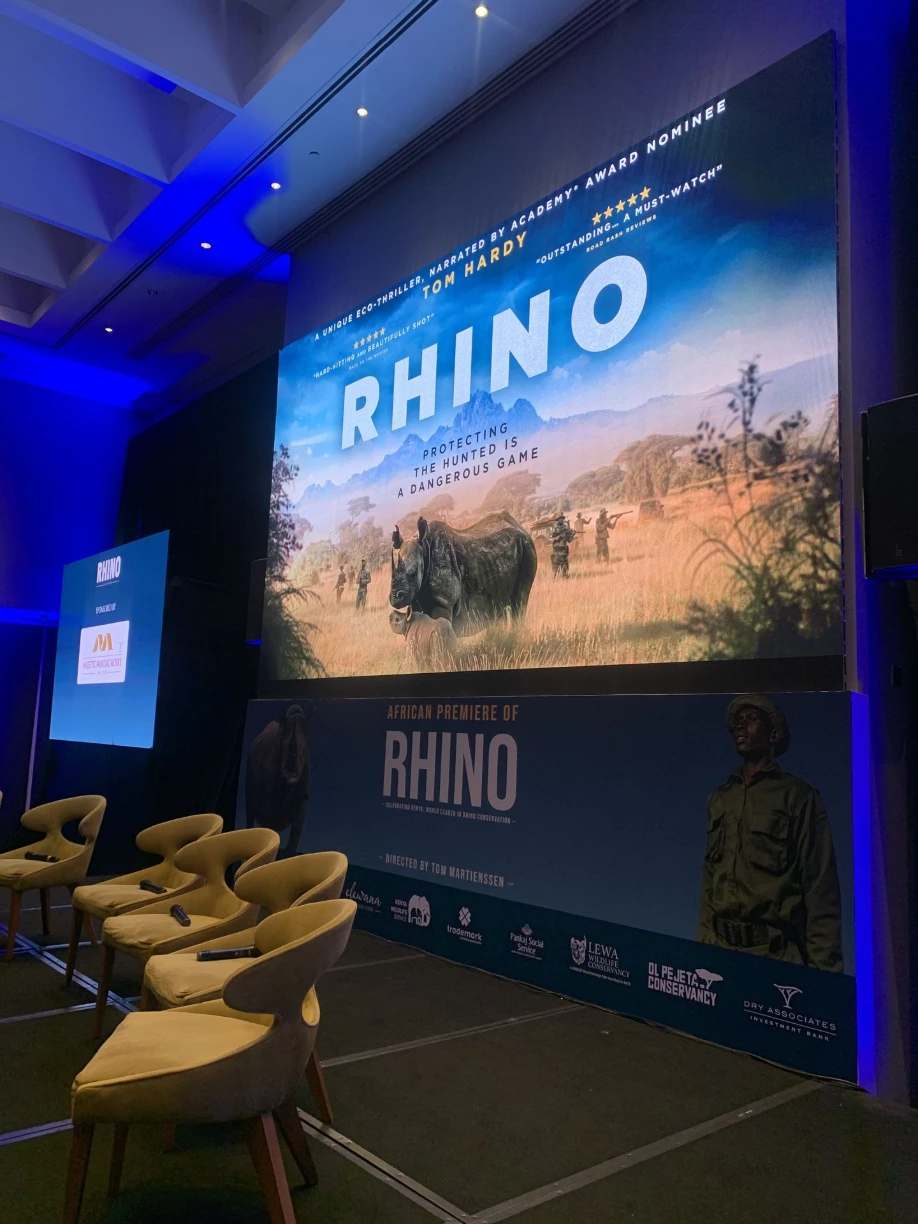
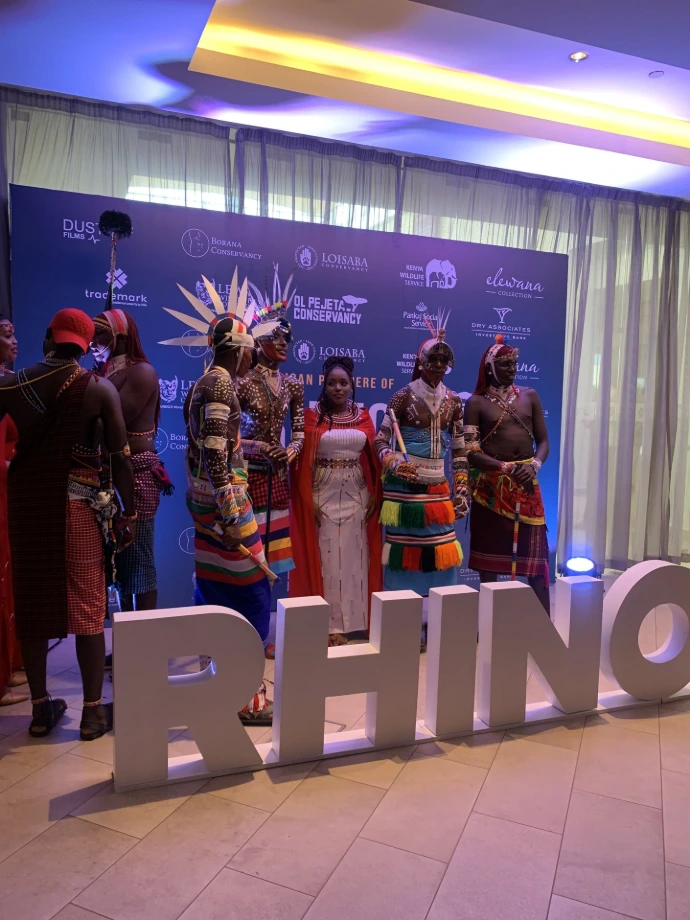
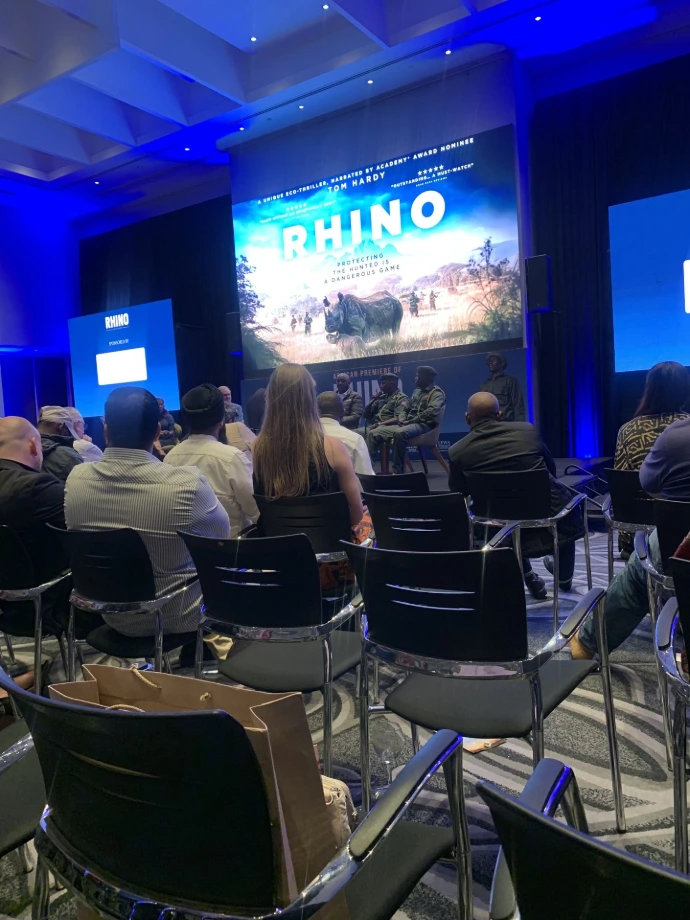
On 26 September, Nairobi hosted the African premiere of Rhino, a documentary directed by Tom Martinsen and narrated by Tom Hardy. Yet the film is less a portrait of the rhinoceros than it is an examination of what conservation demands from the people who make it possible.
For years, the central threat to endangered wildlife has been clear: poaching. Rangers, trackers and conservation teams have been trained, equipped and deployed to prevent animals from becoming casualties of an illegal trade. But Rhino looks beyond that familiar narrative. As conservation succeeds and populations recover, new challenges emerge. Survival creates its own pressures.
Space is one of them.
As more rhinos survive and more calves are born, the question becomes where they can safely live. Territorial pressures can turn animals against one another, with younger rhinos particularly vulnerable. Conservation therefore becomes more complicated than protecting animals from people. It also means managing the increasingly difficult relationship between animals, territory and one another.
Cross-conservation cooperation has become part of the response, allowing rhinos to be moved between areas and populations to be managed across protected spaces. But even cooperation cannot eliminate the fundamental constraint: there is only so much land available, and the pressure on that land continues to grow.
Then there is food.
Prolonged drought does not distinguish between wildlife and the communities living alongside them. When water and food become scarce, conservation is no longer an isolated environmental concern. It becomes a question of human survival. Communities facing severe scarcity can themselves become vulnerable to insecurity, desperation and banditry.
For conservation guards, this changes the nature of the job.
They are no longer protecting wildlife in isolation. Increasingly, they find themselves protecting the communities around them as well. That responsibility can bring them into direct confrontation with armed groups, sometimes with devastating consequences. The people standing between wildlife and its destruction are themselves exposed to the insecurity surrounding the protected areas.
And yet, the system continues to hold.
Part of its strength lies with the guards themselves, whose knowledge of the landscape and commitment to their work make conservation possible. But another, less visible layer of protection comes from the communities. Information travels through relationships. Residents observe movements, recognise unfamiliar activity and communicate what they know to the people responsible for protection. Conservation, in this sense, becomes a collective enterprise.
It was precisely here that Rhino left us with an uncomfortable question.
The documentary offers an unusually close view of the realities of conservation: the people involved, the equipment they use, the infrastructure that supports them and the community networks through which information moves. These details are important because they make the work tangible. They allow audiences to understand what conservation actually requires.
But they also expose something more fundamental about the insecurity surrounding it.
No one is entirely outside it.
In making Rhino, some of the information that gives the film its unusual access and makes its account of conservation so compelling may also raise difficult questions about what should be revealed and what may need to remain concealed. Equipment, infrastructure, routines and the people who provide information are all part of the machinery that makes conservation possible, but they can also become points of vulnerability.
The reality is that you do not have to be identified as a source to be exposed to the consequences of insecurity. Nothing remains a secret forever. You do not have to be directly involved. In an environment where information, suspicion and desperation travel quickly, simply being present can be enough to place someone at risk. Banditry does not discriminate among its victims, whether a ranger, a farmer, a resident or a bystander. Once insecurity becomes sufficiently widespread, it drags everyone into it. It spares no one and nothing.
That may be the film's most sobering insight.
Conservation is often presented as a choice to protect something: a species, a habitat, an ecosystem. Rhino reveals the more complicated reality. Protecting wildlife also means protecting the people who live beside it. It means understanding that environmental pressure, economic desperation and insecurity can no longer be treated as separate problems.
There are no simple guarantees in such an environment. The people working on the ground can prepare, communicate, cooperate and intervene, but they cannot control every variable around them.
What remains is responsibility.
Do the right thing. Protect what can be protected. Work with the people who share the landscape. Communicate what you know. And hope that, collectively, it is enough.
Rhino does not make conservation look heroic in the conventional sense. It makes it look human, precarious and profoundly necessary.