
From international tournaments and new commercial entrants to grassroots participation, Kenya's sporting ambitions are expanding. The challenge is to build the institutions, services and public infrastructure capable of sustaining them.
A Nation of Champions
Nairobi is strengthening its position as one of Africa's most consequential sporting cities. Its advantage rests on an established international athletics reputation, a growing calendar of major competitions, and increasing interest in sport as both a commercial industry and a public lifestyle.
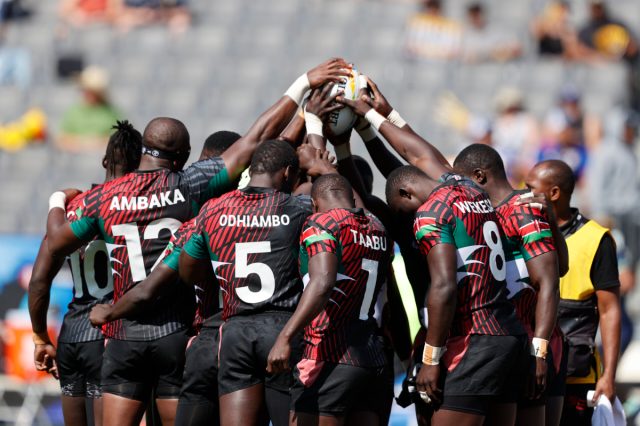
The return of major football tournaments to Kenya, culminating in the 2025 staging of the African Nations Championship (CHAN), demonstrated the country's capacity to mobilise infrastructure, hospitality, security and public enthusiasm around international competition. The next test is AFCON 2027, which Kenya will co-host with Uganda and Tanzania. The expansion of Nairobi's rugby sevens calendar, alongside investment in new and refurbished venues, further strengthens its position as a regional host city.
The arrival of international sports retailers and the expansion of performance-oriented consumer culture suggest an opportunity to develop a broader sporting marketplace, from apparel and equipment to training services, recreation and sports-related experiences.
International competitions bring visiting teams, officials, supporters, broadcasters, sponsors and commercial partners into the local economy. Hotels, restaurants, transport operators, event producers and retailers all stand to benefit. Sports events are also giving visitors reasons to extend their stays, explore other destinations and spend beyond the immediate event.
Although hosting a tournament establishes visibility, becoming a sports capital requires the capacity to host repeatedly, develop athletes continuously, support spectators safely and generate value long after the final whistle.
Kenya's sporting ambition is therefore moving into a more demanding phase.
The question is no longer simply whether Nairobi can attract major competitions. It is whether the country can convert that attention into a durable domestic industry.
The Infrastructure Is Growing. The System Remains Uneven.
The most revealing weakness in Kenya's sports ambitions lies in the distance between the infrastructure being built for international audiences and the everyday conditions under which athletes train, compete and recover.
A stadium can satisfy international hosting requirements while the athletes who use it lack reliable access to suitable training grounds, equipment, qualified coaches, sports scientists and medical care. The September 2026 reporting by The Star on athlete development illustrates this contradiction. Athletes and sports leaders described shortages of equipment, limited access to suitable facilities, delayed funding and inadequate medical support, particularly beyond established sporting centres. Some athletes also struggle to earn a reliable living despite possessing the ability to compete at a high level.
This is not a marginal concern. It is a question of what Kenya's sports investment is designed to achieve. If the principal measure of progress is the ability to stage an international tournament, the system risks prioritising the most visible part of sport over the infrastructure of human development that makes sporting excellence possible.
The governance problem: Who is responsible for the athlete?
Kenya's sports administration is not without structure. The Sports Act, 2013 established a framework involving the Department of Sports, Sports Kenya, the Kenya Academy of Sports, the Sports Registrar and other institutions. National federations organise their respective disciplines, while clubs, schools and community programmes provide important routes into participation and competition. The Department of Sports is responsible for policy, planning, budgeting and coordination; Sports Kenya has responsibilities covering facilities and sports programmes; and the Sports Registrar regulates sports organisations and professional bodies.
The weakness is therefore not simply an absence of institutions. It is whether their respective responsibilities translate into a coherent system for athletes.
Consider the journey from a school competition to an elite national team. Who ensures that a promising athlete identified by a school receives consistent coaching, access to appropriate facilities, medical assessment, competitive opportunities and financial support? Which institution is accountable if the athlete falls through the gaps between a school, a county programme, a club and a national federation?
These questions expose a structural vulnerability. A network of organisations can exist on paper without providing continuity in practice. Where responsibilities overlap, coordination becomes difficult to assess. Where responsibilities are fragmented, each institution may fulfil its immediate mandate while the athlete's broader needs remain unmet.
The 2025 Draft National Sports Policy itself identifies institutional overlaps, unclear mandates and weaknesses in the relationship between national and county-level sports development. Its assessment suggests that Kenya's framework requires more than additional investment: it requires greater clarity about who is responsible for what, and how performance should be measured.
The Sports Act, 2013 should consequently be assessed not simply by its existence, but by its outcomes.
Has it produced accessible facilities, accountable federations, reliable development pathways and consistent support for athletes across disciplines and counties?
This is a question that requires consistent testing.
The stadium fallacy
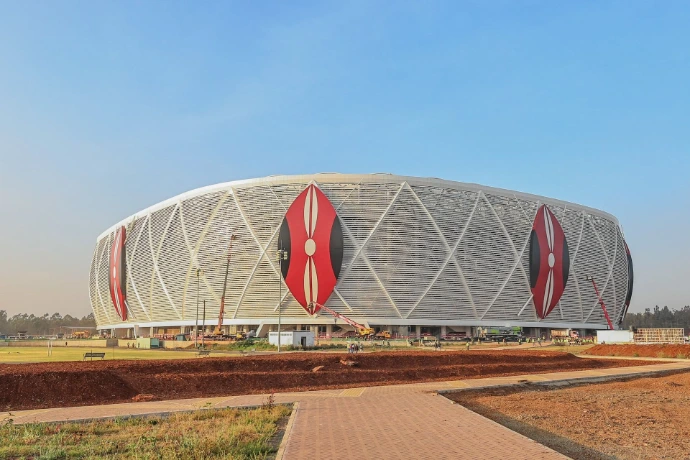
Kenya's preparations for AFCON 2027 demonstrate why infrastructure must be assessed beyond its construction cost and visual impact. Renovated venues and new stadiums can improve hosting capacity, attract international fixtures and create opportunities for surrounding businesses. Yet buildings require maintenance, qualified staff, programming and sustainable operating budgets.
A stadium that is too expensive for domestic federations to use regularly risks becoming a venue whose value is concentrated around major events.
The existence of modern infrastructure, in other words, does not automatically guarantee meaningful access to it.
The same principle applies geographically. Investment concentrated in Nairobi and a small number of major centres cannot, by itself, resolve the shortage of facilities across rural and underserved counties. A national sports strategy must distinguish between infrastructure designed to host international spectators and infrastructure designed to develop athletes and support ordinary participation.
There is also a question of public accountability. Construction delays, cost control, procurement and maintenance all determine whether capital expenditure produces lasting value. The public should be able to establish not merely whether a stadium was completed, but whether it is accessible, regularly used, financially sustainable and contributing to the development of sport.
Talent is not a substitute for a system
Kenya's international sporting reputation can obscure the extent to which individual achievement compensates for institutional weakness. Exceptional athletes may emerge despite inadequate support. Their success does not establish that the development system is functioning optimally.
For young athletes, the barriers begin well before elite competition. Training costs, nutrition, transport, equipment and access to qualified coaching can determine whether a promising participant continues. Medical support becomes particularly important as training intensifies, while access to competitions and scouting determines whether talent is recognised beyond its immediate community.
The commercial side presents another challenge. A growing sports market can attract sponsors and retailers without guaranteeing that money reaches grassroots programmes, smaller federations or athletes outside established institutions. Commercial interest is valuable, but its benefits depend on the mechanisms connecting investment to participation and athlete welfare.
The central contradiction is clear: Kenya can be recognised globally for sporting excellence while many of its aspiring athletes remain dependent on pure luck.
Sport Is Becoming a Lifestyle, Not Just a National Achievement
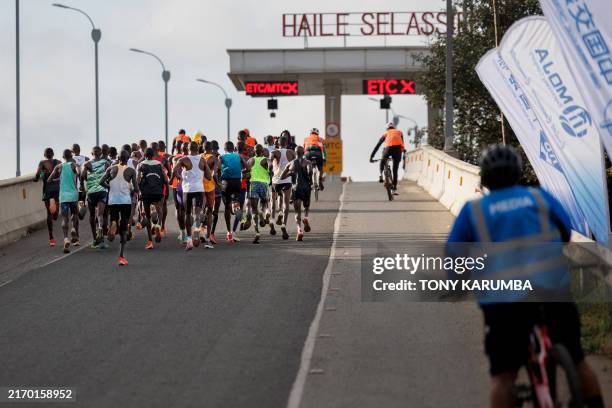
The most consequential development may be taking place beyond elite competition. Across Nairobi, sport is increasingly becoming a social activity, a form of recreation and a visible part of urban life. The growth of recreational running clubs, weekend sport group and mass-participation races suggests that a wider public is finding its own reasons to participate in sport.
The emergence of communities such as We Run Nairobi illustrates this shift. What began as a small gathering of runners has grown into a community attracting hundreds of participants, with reports of more than 1,200 people attending on its busiest days. Other established running communities, including Urban Swaras, have helped make organised recreational running part of Nairobi's social calendar.
This development matters because it changes the economics and cultural relevance of sport. The participant no longer needs to be an aspiring Olympian or a professional athlete. Running can be a social ritual, a personal challenge, a way to explore the city or an entry point into a broader commitment to physical activity.
This is an important distinction. A country can produce world-class athletes without having an equally developed culture of mass participation. A stronger sports economy emerges when elite performance and everyday recreation reinforce each other. More participants create demand for accessible facilities, coaching, footwear, events and fitness services. Those services, in turn, can support wider participation and create employment beyond professional competition.
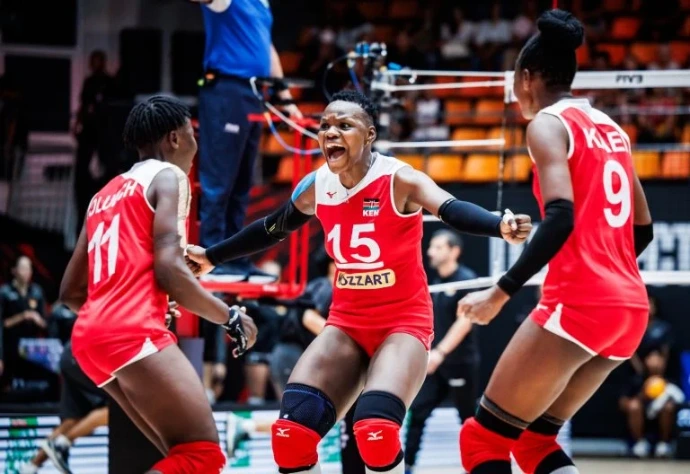
The same logic applies to volleyball, rugby, swimming, cycling, basketball and emerging digital sporting disciplines. Each can develop an audience that extends beyond the national team, creating demand for local competitions, community clubs, training programmes and related services.
The opportunity is to build a market in which sport is both something Kenya exports through international excellence and something its population can access as part of ordinary life.
The Way Forward
Kenya's next phase of sporting development requires a shift in emphasis. International events and modern venues remain important, but they should be treated as components of a larger strategy rather than the principal measures of success.
First, clarify accountability across the sports system. The national government, county governments, federations, schools and clubs need defined responsibilities and measurable obligations. The athlete's progression from grassroots discovery to elite competition should be treated as a continuous pathway, with clear expectations for coaching, facilities, medical support and access to competition. Institutional performance should be assessed against outcomes rather than the number of programmes announced.
Second, prioritise the operating conditions of sport. New stadiums attract attention, but equipment, training facilities, qualified coaches, physiotherapists, sports physicians and sports-science professionals determine whether athletes can develop consistently. Investment must cover maintenance and recurrent operating costs, not merely construction.
Third, make grassroots participation a central economic and public-health objective. Counties need accessible spaces for running, walking, cycling, team sports and recreation. Schools require functional playing fields, equipment and trained personnel. Community clubs and mass-participation events should be recognised as part of the sporting ecosystem, not treated as peripheral activities. Nairobi's running culture offers a practical example of how organised participation can develop beyond traditional elite pathways.
Fourth, establish stronger financial and commercial links between major events and domestic sport. Hosting international competitions should generate measurable local benefits. This means transparent procurement, local employment, opportunities for Kenyan suppliers, support for domestic event organisers and partnerships that connect sponsors to athlete development. Public investment should be evaluated against clear indicators, including facility utilisation, jobs created, local business participation and the proportion of resources reaching grassroots programmes.
Fifth, build the commercial sectors surrounding sport. Kenya's sporting reputation creates opportunities in sports tourism, apparel, equipment, event production, athlete management, coaching, rehabilitation and digital sport. The arrival of international retailers can expand consumer choice, but a mature industry must also create room for Kenyan enterprises to manufacture, distribute, innovate and compete. The objective should be to retain more of the economic value generated by the country's sporting identity.
Finally, governance must become more transparent and responsive. Funding delays, weak oversight, inconsistent athlete welfare and anti-doping compliance concerns can undermine the credibility on which international sport depends. Clear reporting, timely disbursement, credible disciplinary processes and effective athlete protections are essential to sustaining trust. The relevant measure of reform is whether the system works reliably for the athlete, the federation, the investor and the public.